
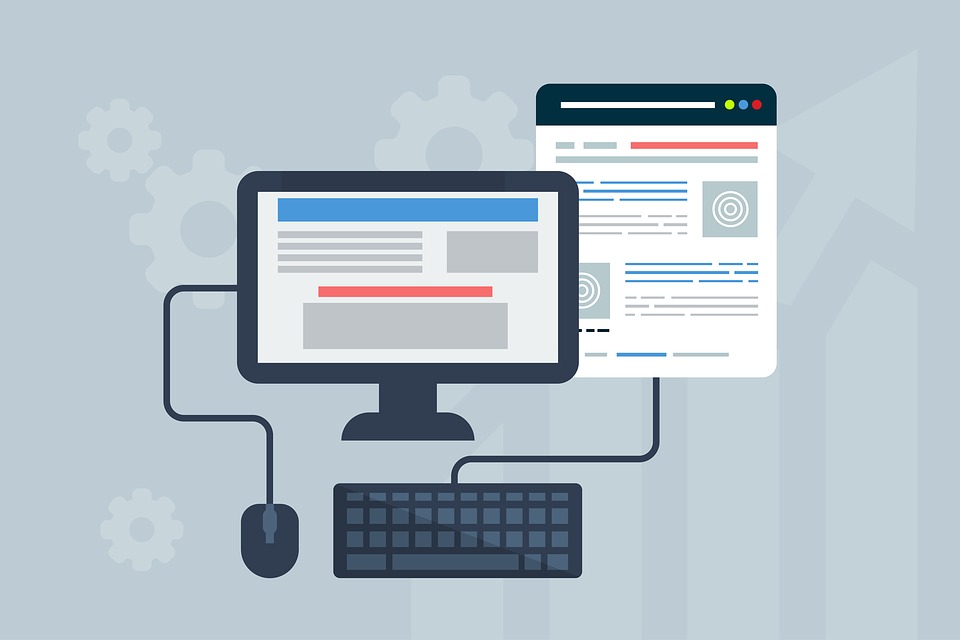
Web design refers to the design of websites that are displayed on the internet. It usually refers to the user experience aspects of website development rather than software development. Web design used to be focused on designing websites for desktop browsers; however, since the mid-2010s, design for mobile and tablet browsers has become ever-increasingly important.
A web designer works on the appearance, design, and, in some cases, content of a website. Appearance, for instance, relates to the colours, font, and images used. Design refers to how information is structured and categorized. A good web design is easy to use, aesthetically pleasing, and suits the user group and brand of the website. Many webpages are designed with a focus on simplicity, so that no extraneous information and functionality that might distract or confuse users appears. As the keystone of a web designer’s output is a site that wins and fosters the trust of the target audience, removing as many potential points of user frustration as possible is a critical consideration.
Static Websites design to give the fixed width to present sites and not changes the width on browser or cannot update the content in static website. It has the advantage of this static design is light on code so loads faster than another website. We design the static websites from one page to hundreds of pages. If you can see on small pc and horizontal part is small, then scroll bar display and you can see in mobile or tablet you can zoom the screen in interesting points. Cost is generally less than dynamic.
Dynamic Website design can be simple or complex depending on the customer's design and development needs. Usually for Simple Dynamic Website Designs, we only charge for Hosting/Domain yearly fees. You can create dynamic website such as JavaScript, .net, .php, open source, jQuery and others with your creativity to design and development. Easy to add and manage content with the help of CMS.
A fixed website design has a covering that is a fixed width, and the components parts inside it have each percentage widths or fixed widths. When the browser on a screen is distended or reduced, images and text may visually fall not together on the screen. Most website users are assumed to browse in 1024×768 resolution or higher in fixed design.
This approach aims to make website presentation easier by displaying websites on different devices in forms that are easy to read and navigate. Explore what makes a site responsive and how some common responsive design patterns work across different devices. Websites created using responsive design are designed to display different content as the browser is expanded or reduced to predetermined sizes.
When resizing the browser, the content on the page spreads itself out to fill the width of the browser when expanded, hence the term fluid design, and will look enlarged or as though it has shrunk. It helps a great deal in making the entire website work fine on different browsers and Setting up multiple widths to videos, content, images to fit different screen resolutions is hectic for designers.
One-page websites are hot and popular-no doubt about that. He best single pages are those that help you convey your message into few quick scrolls. They are well designed and compatible with most Internet browsers. One page sites provide a linear journey for the user and work particularly well for devices where scrolling is the main form of navigation.
Nguyen, T., 2018. Design for design - design by community. MATEC Web of Conferences, 193, p.01015.
The Interaction Design Foundation. 2020. What Is Web Design? [Online] Available at: https://www.interaction-design.org/literature/topics/-design